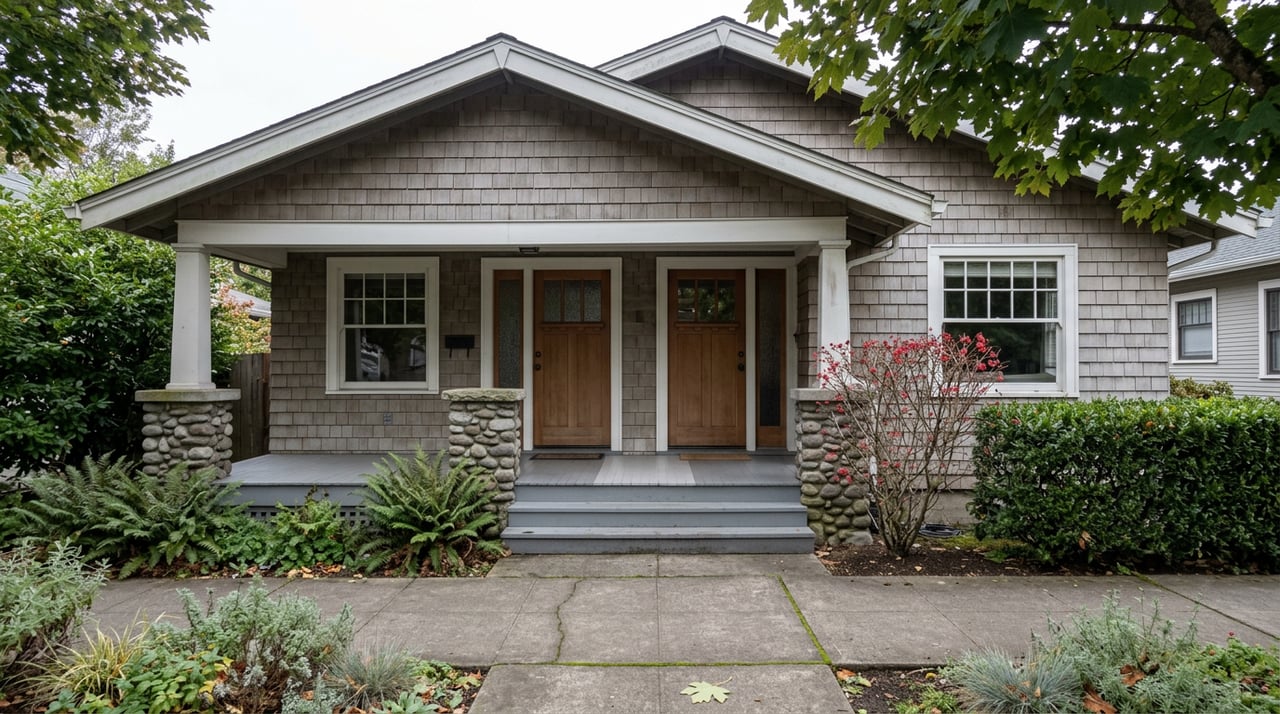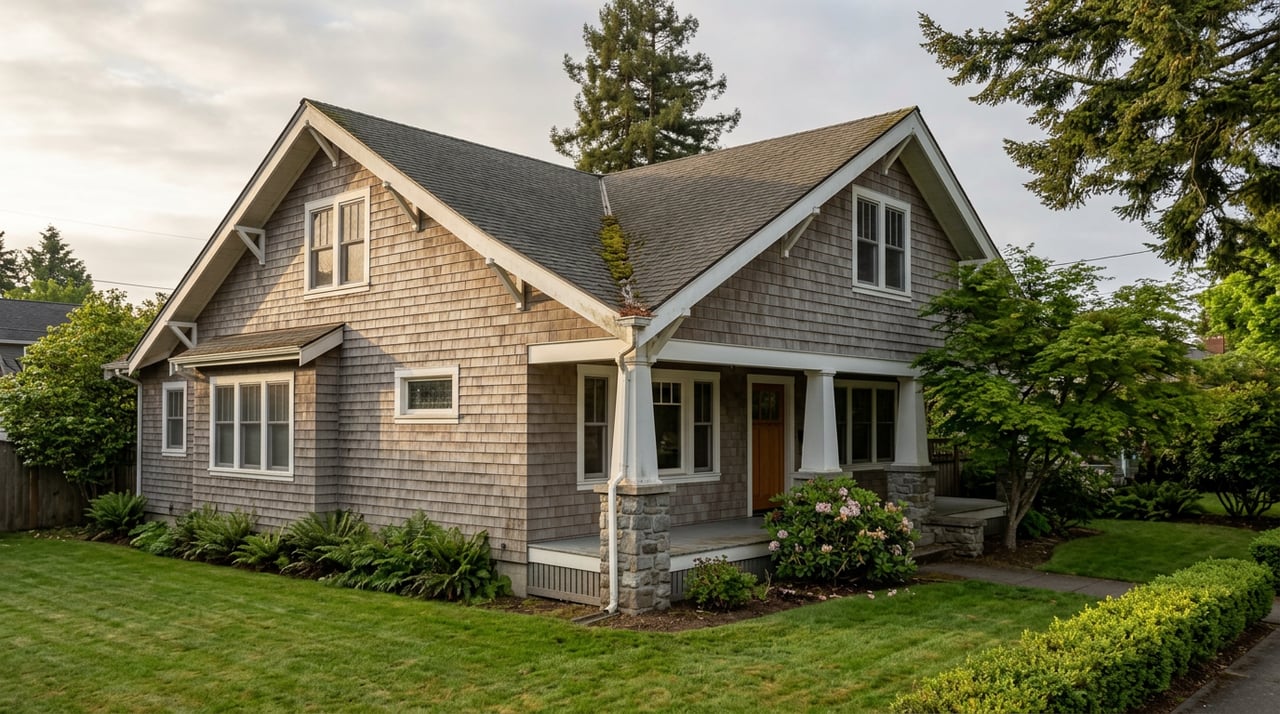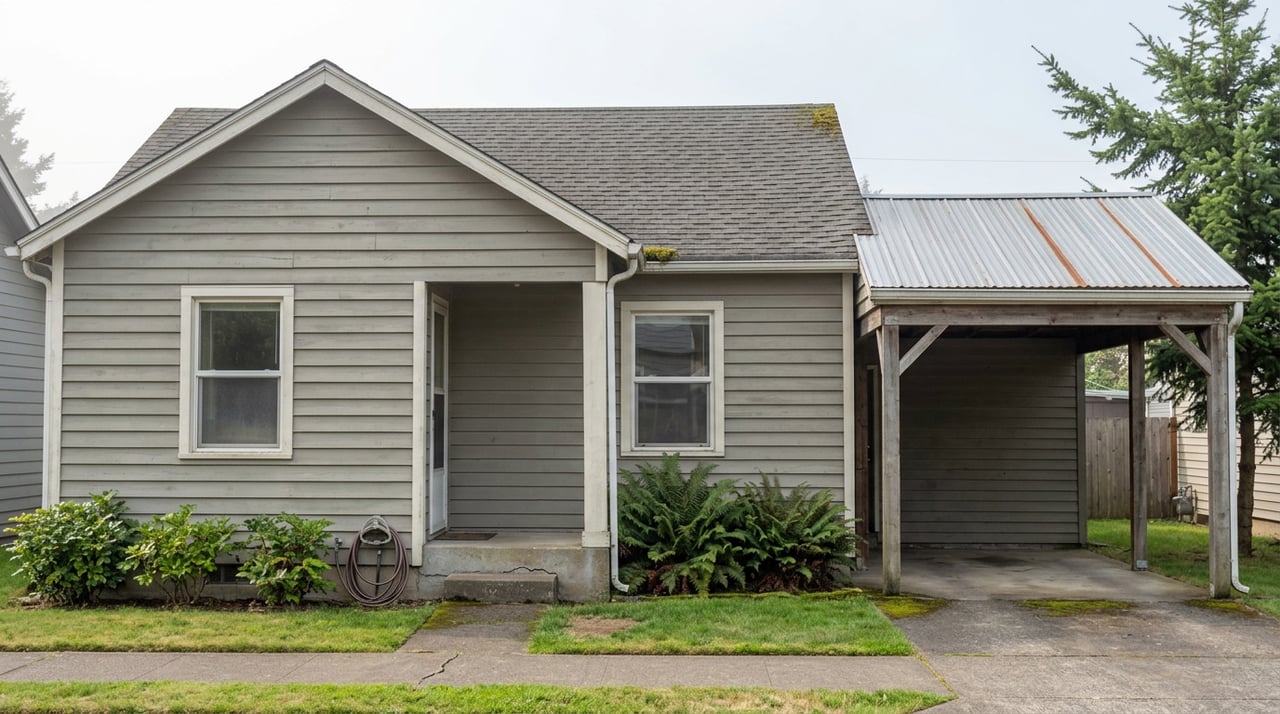
Scroll through active listings in Scotia right now and a pattern jumps out before you even get to square footage. A 1,126-square-foot house on Williams Street lists for $280,000 with a new roof. A 1,117-square-foot home on Mill Street lists for $329,000. A 1,516-square-foot house on B Street had its price cut $15,000 in late July, landing at $305,000. Different streets, different bedroom counts, different years on the market, and yet the seller offer attached to each one reads almost word for word the same: a credit toward closing costs of up to $10,000 with a full-priced offer, a one-year home warranty, and a Strickland pest clearance thrown in.
That is not four sellers who happened to land on similar marketing language. It is one seller, repeating itself.
One Seller, Not Hundreds
Scotia is often described as America's last company town, and for most of its life that was literally true. Pacific Lumber Company, known locally as PALCO, built the town in 1863 to house its mill workers, and for more than a century the company owned every lot, every water main, and every home in it. The company's fortunes turned in the following decades, and Pacific Lumber's bankruptcy was finalized in 2008. A New York hedge fund, Marathon Asset Management, ended up holding the town as an asset nobody at the fund had asked for.
Marathon set up a company called Town of Scotia to handle what came next: selling roughly 270 homes to private buyers, one at a time, in a place that had never had private buyers before. Two longtime PALCO employees, Mary Bullwinkel and Steve Deike, took on the job of running that sale. Deike was born in the Scotia hospital and spent his career rising through PALCO's ranks. Now, as Bullwinkel and Deike work through the town's remaining inventory, Deike's language has shifted from timber operations to phrases like "infrastructure improvements" and "subdivision maps."
That detail matters more than it sounds. Every active Scotia listing you see today, no matter which agent's name is on it, ultimately traces back to this single seller working through a single, unusually large portfolio. When you see the same $10,000 credit on four different houses, you're not seeing four negotiable sellers. You're seeing one seller's standard offer, repeated across whatever inventory happens to be live.
The Town Was Built to Be Owned, Not Sold
The reason this sale has taken nearly two decades and still isn't finished is not a soft housing market. It's plumbing.
When Marathon took possession of Scotia, the town wasn't made up of individually platted parcels the way most residential streets are. It was one property, with shared gas lines and shared water mains running under company-built homes that had never needed separate meters or separate titles because they'd never been separately owned. Before a single house could close escrow, Town of Scotia had to subdivide the land parcel by parcel and build out the individual utility infrastructure that a normal subdivision would have had from day one. As of the start of 2026, that process had produced buyers for 170 of the roughly 270 homes in town, which means roughly a third of the town is still working through that conversion.
This is the piece that gets lost when a Scotia listing shows up on a portal next to a normal Rio Dell or Fortuna house at a similar price. The comparison implies these are the same kind of transaction with a different number attached. They aren't. A Scotia purchase is a purchase from a single institutional seller still mid-project on infrastructure that most buyers elsewhere never have to think about.
The Street You're Looking At Tells You the Decade
Here's where it gets useful for anyone actually comparing houses. When Town of Scotia began releasing homes for sale, it didn't do it all at once. It broke the town into named phases, each tied to specific streets, and released them years apart:
| Phase | Local name | Streets | Homes | Originally targeted to begin |
|---|---|---|---|---|
| One | The Redwoods | Eddy, Mill, Church | 39 | 2017 |
| Three | Murphy's Pointe | B, Main, 4th–6th | 67 | August 2018 |
| Four | Salmon Run | Williams | 74 | August 2019 |
| Five | The Depot | North Court | 19 | August 2020 |
Look back at today's active listings and the connection is direct. The house on Mill Street and an unusually large 4,000-square-foot property on Church Street sit in what Town of Scotia called The Redwoods, the very first phase, already underway by 2017. The house on B Street sits in Murphy's Pointe, targeted to begin a year later in August 2018. The house on Williams Street, the one with the new roof, sits in Salmon Run, targeted to begin two years after that in August 2019.
That gap matters to a buyer. A house in The Redwoods has been in private hands for close to a decade, long enough for a previous owner to have already dealt with whatever legacy PALCO-era quirks the home carried and made their own updates. A house in Salmon Run privatized more recently, which can mean fewer prior owners have had a chance to work through original systems. Neither is automatically better. But when two houses are priced within $25,000 of each other, the street name is telling you something about the home's ownership history that the square footage number never will.
What 217 Days on Market Actually Measures
Scotia listings tend to sit. As of early August 2026, homes there had averaged around 217 days on market, and only two homes had sold townwide in the preceding month.
In most markets, a number like that signals soft demand or an overpriced batch of listings. In Scotia, it's more likely measuring the pace of a single seller working through a finite, aging portfolio at whatever speed the subdivision and utility work allows, not a lack of buyer interest. Town of Scotia isn't racing to clear inventory the way a builder with carrying costs would. Deike has said he originally expected the sale to take about three years. Nearly two decades later, it still isn't finished. The slow pace is closer to a feature of how the sale was structured than a signal about the houses themselves.
For a buyer, that means the usual instinct, that a home sitting for months must be flawed or overpriced, doesn't transfer cleanly to Scotia. Ask your agent to check the phase history and utility status on a specific address rather than reading the days-on-market number the way you would anywhere else.
The Hospital Is the Signal to Watch
The clearest evidence that Scotia's transition isn't finished sits a few blocks from Main Street. The town's century-old hospital, a PALCO-era building, was purchased by Colorado-based architect Gage Duran, who is now working to convert it into apartments. Duran has described Scotia as a microcosm of the broader shifts reshaping timber and cannabis-dependent parts of Humboldt County.
A hospital-to-apartments conversion doesn't move today's home prices. But it's a leading indicator of what happens after the last PALCO-era house sells: new uses layered onto old company infrastructure, adding rental housing and, potentially, new neighbors to streets that have spent most of their history under one owner. Buyers looking at Scotia as a long-term hold should track projects like this one as closely as they track comparable sale prices, since they're a better preview of where the town is headed than a snapshot median ever could be.
What This Means If You're Looking at a Listing Here
Before writing an offer on a Scotia home, a few questions are worth asking that wouldn't come up in most other Humboldt neighborhoods:
- Which phase was this address released in, and how long has it been privately owned
- Has the individual gas and water metering for this specific lot been fully completed, or is any shared infrastructure still in transition
- Is the seller concession package standard across current Town of Scotia listings, or is this a private resale with room to negotiate terms differently
- Does the home have a garage. Many original PALCO-era homes were built without one, so a carport or attached garage is a genuine differentiator here, not a given
None of this makes Scotia a harder place to buy. It makes it a different kind of transaction than the listing price alone suggests, and that's exactly the sort of local detail worth working through with someone who's tracked the sale from the beginning.
Frequently Asked Questions
Is Scotia still owned by one company? No. Roughly 170 of the original 270 homes have sold to private owners as of the start of 2026. The remaining inventory is still held and sold by Town of Scotia, the entity Marathon Asset Management formed after PALCO's 2008 bankruptcy.
Why do so many Scotia listings offer the same closing cost credit? Because many of them trace back to the same seller. Town of Scotia has offered a standardized credit, home warranty, and pest clearance package across its remaining listings, which is why the terms look identical from house to house.
Does a house's street name actually tell you anything useful? Yes. Town of Scotia released homes in named phases tied to specific streets, starting with Eddy, Mill, and Church in 2017 and moving through Murphy's Pointe, Salmon Run, and The Depot in the years after. The phase a street belonged to is a rough proxy for how long a home has been privately owned.
If you're weighing a Scotia listing against homes in Rio Dell, Fortuna, or elsewhere in Humboldt County, it helps to talk through the specific phase, infrastructure status, and ownership history of the address you're considering before you get to the offer stage. You can browse current homes in the area on our Scotia neighborhood page, or work through the numbers on a specific property with our buyer's guide. The team at Coldwell Banker Cutten Realty has been working Humboldt and Trinity County transactions for more than 50 years, and we're glad to walk through what a specific Scotia address actually means before you write an offer. Contact us today.