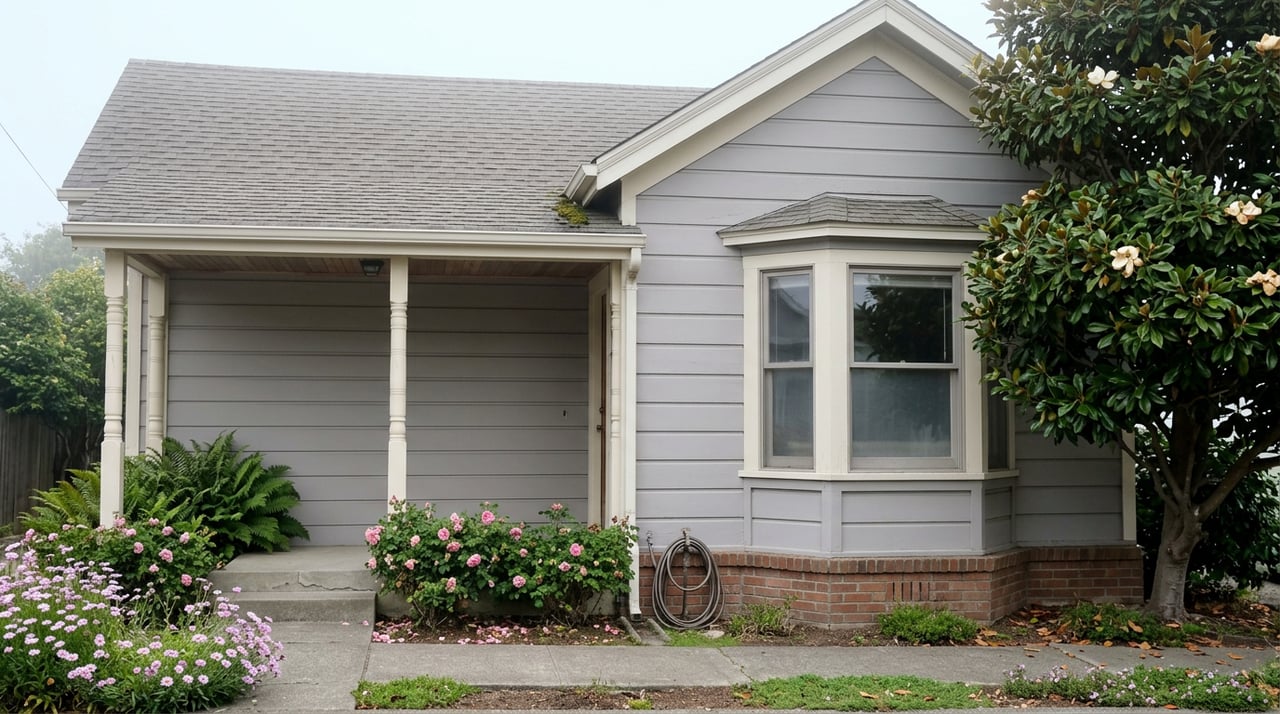
A buyer tours a Second Empire on C Street, falls for the bay windows and the turned porch posts, and writes an offer within a week. The inspection turns up exactly what you'd expect in a home built before 1910: some knob-and-tube still live behind a few outlets, a stone-and-brick foundation with hairline settling, galvanized pipe feeding the upstairs bath. None of it is a surprise. Buyers of century-old homes generally know what they're signing up for structurally.
What catches people off guard happens after the inspection, when the lender's insurance requirement comes back and the buyer discovers that finding a standard homeowners policy for that same house is harder, slower, and more expensive than finding the house itself. In Eureka right now, insurance underwriting is doing more to gatekeep historic-home purchases than the inspection report ever does.
Why the Insurance Conversation Has Changed
For years, the assumption in a coastal, low-wildfire market like Humboldt County was that insurance was a formality. Fire risk was someone else's problem, out in the hills or the foothills, not on a fogged-in street two blocks from Humboldt Bay.
That assumption no longer holds statewide. A June 2026 Stanford analysis found that average California homeowner insurance premiums rose 84 percent between the end of 2020 and March 2026, and that the state's FAIR Plan, originally built as a narrow backstop for wildfire-exposed properties, now covers about 5 percent of California's single-family homes, up from 1.5 percent in December 2020. The same research flagged something specific: FAIR Plan reliance is now showing up in mortgages in moderate- and low-wildfire-risk ZIP codes at twice the plan's overall market share. That is not a wildfire story anymore. It is a story about aging housing stock, and it lands directly on Eureka's Victorian inventory.
The mechanism is simple once you see it. Standard insurers evaluate the home's systems, not just its address. A house with original knob-and-tube wiring, an outdated panel, or unreplaced galvanized plumbing reads as elevated risk regardless of whether it sits in a fire zone. When a standard carrier declines or prices the policy out of reach, the FAIR Plan becomes the only door left open, and FAIR Plan coverage is limited to fire, smoke, lightning, and explosion. Nearly half of FAIR Plan customers end up buying a second policy just to patch the gaps that used to come standard.
What the Inspection Actually Finds, and Why It Matters to a Carrier
Local inspectors who work Eureka's older neighborhoods regularly, including Redwood Coast Inspections and Six Rivers Inspections, see the same pattern of findings in pre-1940s homes: original wiring segments that were never fully replaced during later remodels, foundations that have moved slightly over a century of settling, and plumbing runs that mix eras of material because updates happened room by room rather than all at once. None of this is unusual for a Victorian. It is exactly what you'd expect from a house built to outlast its first roof.
The problem is that an inspection report and an insurance application read the same facts through different lenses. A buyer's inspector might note knob-and-tube in a crawlspace and call it a manageable, budgetable item. An underwriter sees the same note and treats it as a fire hazard that may disqualify the policy outright, because that wiring predates modern insulation standards and grounding. Foundation cracks that an inspector calls cosmetic settling can still trigger a request for a structural engineer's letter before some carriers will write a policy at all.
This is the gap that catches buyers who assumed the inspection was the finish line. It is really the starting point for a second, less familiar negotiation, this one with an insurance company instead of a seller.
The HO-8 Trade-Off Nobody Explains Up Front
When a standard policy isn't available, the fallback for older and historic homes is often an HO-8 policy, a coverage form built specifically for properties whose replacement cost may exceed their market value. HO-8 policies exist because rebuilding a house with plaster walls, old-growth fir floors, and custom millwork the way it was originally built can cost far more than what the home would sell for on the open market.
The trade-off is real. HO-8 coverage typically pays out on an actual cash value basis, meaning depreciation gets subtracted from any claim, rather than the full replacement cost a standard policy would pay. For a buyer who has just stretched to close on a Victorian, discovering that a covered loss might not fully rebuild the home as it stood is not a small detail. It changes the math on what the house is actually worth owning.
The Part of This That Actually Works in the Buyer's Favor
Here is the piece that gets missed in most conversations about buying old in Eureka: being on a historic register is not purely a liability. It can open a different regulatory path entirely.
California's Historical Building Code, administered under Title 24, gives owners of qualified historic properties an alternate set of construction standards for preservation, restoration, and rehabilitation work, distinct from the standard code that applies to a typical remodel. For a homeowner rewiring a Victorian or repairing an original foundation, that alternate path can mean the difference between a renovation plan that respects the home's original materials and one that forces modern-code replacement of details that made the house worth buying in the first place.
Eureka has its own Local Register of Historic Places, maintained separately from the National Register, and the Eureka Heritage Society, a preservation group founded in 1973, keeps that list current and runs an annual Preservation Awards program recognizing owners who have restored qualifying properties. That society is a genuine resource for a buyer trying to figure out what a specific address's designation actually means for future work, not just a historical curiosity. For sourcing the kind of period-accurate millwork a restoration project on a registered property might call for, Blue Ox Millworks in Eureka, founded by woodworker Eric Hollenbeck, has been producing custom gingerbread trim, turned balusters, and other Victorian-era architectural details for restoration projects for decades.
None of this replaces an insurance quote. But a buyer who knows their target property qualifies for the Historical Building Code path, and who has a realistic sense of what rewiring or foundation work will cost through a preservation-minded contractor, walks into the insurance conversation with a plan instead of a surprise.
What to Ask Before You're Under Contract
A few questions asked early save weeks of stress later:
- Has the home's electrical system been fully updated, or does knob-and-tube remain in any part of the structure? Ask for permit records, not just a verbal answer.
- Is the property listed on Eureka's Local Register or the National Register? That status affects both renovation rules and, potentially, insurance underwriting conversations.
- Get a homeowners insurance quote in progress before you're deep into your inspection contingency window, not after. If a standard carrier declines, you want to know while there's still time to negotiate repairs or adjust your offer, not after removing contingencies.
- Ask your lender directly whether they'll accept a FAIR Plan or HO-8 policy on this specific property. Some do. Some require supplemental coverage stacked on top, which changes your real monthly cost.
A Quick Word on Where This Applies
This friction is concentrated in Eureka's genuinely older stock, the Victorian and pre-1950 homes clustered most heavily in and around Old Town's historic district, along with scattered older properties in Cutten and Myrtletown. A mid-century ranch in Myrtletown built in the 1960s or a newer build near Pine Hills won't run into the same knob-and-tube or original-foundation questions. If you're weighing a century home against a newer one in the same price range, the insurance conversation is one more variable worth pricing in before you fall for the trim work.
Frequently Asked Questions
Does a historic designation make insurance more expensive? Not automatically. The designation itself is not what raises premiums. It's the underlying condition of the home's systems, wiring, plumbing, and foundation, that underwriters price against. A registered Victorian with fully updated electrical can insure more easily than an unregistered older home with original wiring still in place.
Can I get standard coverage on a house with some original knob-and-tube still present? It depends on the carrier and how much of the system has been updated. Some insurers will cover a home if the knob-and-tube is confirmed inactive or isolated to a small area, verified by a licensed electrician. Others decline outright. This is worth confirming before you remove your inspection contingency.
Does being in Old Town's historic district make renovation harder? Not necessarily. Properties on Eureka's Local Register or the National Register can use the California Historical Building Code, an alternate compliance path built specifically for preservation work, which can actually simplify certain renovations compared to forcing full modern-code replacement of original materials.
Buying a Victorian in Eureka is still one of the more rewarding ways to own a piece of the region's history, and the friction described here is manageable when you know it's coming. If you're comparing an older home in Old Town, Cutten, or Myrtletown against newer construction elsewhere in the county, our buyer's guide walks through the broader process, and our Eureka neighborhood guide breaks down how the city's pockets differ street by street. For a conversation about a specific address, insurance included, Coldwell Banker Cutten Realty has been guiding Humboldt County buyers through exactly this kind of decision for more than 50 years.